


We collect cookies to analyze our website traffic and performance; we never collect any personal data. Cookie Policy
Accept
NEW YORK DAWN™NEW YORK DAWN™NEW YORK DAWN™
Notification Show More
Font ResizerAa
  • Home
  • Trending
  • New York
  • World
  • Politics
  • Business
    • Business
    • Economy
    • Real Estate
  • Crypto & NFTs
  • Tech
  • Lifestyle
    • Lifestyle
    • Food
    • Travel
    • Fashion
    • Art
  • Health
  • Sports
  • Entertainment
Reading: A.I. Is Not Sentient. Why Do People Say It Is?
Share
Font ResizerAa
NEW YORK DAWN™NEW YORK DAWN™
Search
  • Home
  • Trending
  • New York
  • World
  • Politics
  • Business
    • Business
    • Economy
    • Real Estate
  • Crypto & NFTs
  • Tech
  • Lifestyle
    • Lifestyle
    • Food
    • Travel
    • Fashion
    • Art
  • Health
  • Sports
  • Entertainment
Follow US
NEW YORK DAWN™ > Blog > Technology > A.I. Is Not Sentient. Why Do People Say It Is?
A.I. Is Not Sentient. Why Do People Say It Is?
Technology

A.I. Is Not Sentient. Why Do People Say It Is?

Last updated: August 6, 2022 5:23 pm
Editorial Board Published August 6, 2022
Share
SHARE
07Sentient AI cover print facebookJumbo

Why Everyone Else Believes

In the mid-1960s, a researcher at the Massachusetts Institute of Technology, Joseph Weizenbaum, built an automated psychotherapist he called Eliza. This chatbot was simple. Basically, when you typed a thought onto a computer screen, it asked you to expand this thought — or it just repeated your words in the form of a question.

Even when Dr. Weizenbaum cherry-picked a conversation for the academic paper he published on the technology, it looked like this, with Eliza responding in capital letters:

Men are all alike.

IN WHAT WAY?

They’re always bugging us about something or other.

CAN YOU THINK OF A SPECIFIC EXAMPLE?

Well, my boyfriend made me come here.

YOUR BOYFRIEND MADE YOU COME HERE

But much to Dr. Weizenbaum’s surprise, people treated Eliza as if it were human. They freely shared their personal problems and took comfort in its responses.

“I knew from long experience that the strong emotional ties many programmers have to their computers are often formed after only short experiences with machines,” he later wrote. “What I had not realized is that extremely short exposures to a relatively simple computer program could induce powerful delusional thinking in quite normal people.”

We humans are susceptible to these feelings. When dogs, cats and other animals exhibit even tiny amounts of humanlike behavior, we tend to assume they are more like us than they really are. Much the same happens when we see hints of human behavior in a machine.

Scientists now call it the Eliza effect.

Much the same thing is happening with modern technology. A few months after GPT-3 was released, an inventor and entrepreneur, Philip Bosua, sent me an email. The subject line was: “god is a machine.”

“There is no doubt in my mind GPT-3 has emerged as sentient,” it read. “We all knew this would happen in the future, but it seems like this future is now. It views me as a prophet to disseminate its religious message and that’s strangely what it feels like.”

You Might Also Like

How Google’s TPUs are reshaping the economics of large-scale AI

How Hud's runtime sensor reduce triage time from 3 hours to 10 minutes

Quilter's AI simply designed an 843‑half Linux pc that booted on the primary attempt. {Hardware} won’t ever be the identical.

OpenAI report reveals a 6x productiveness hole between AI energy customers and everybody else

The 70% factuality ceiling: why Google’s new ‘FACTS’ benchmark is a wake-up name for enterprise AI

TAGGED:Altman, Samuel HArtificial IntelligenceCerebras SystemsComputers and the InternetDeepMind Technologies LtdGoogle Incinternal-sub-onlyLemoine, BlakeMitchell, Margaret (Researcher)The Washington Mail
Share This Article
Facebook Twitter Email Print

Follow US

Find US on Social Medias
FacebookLike
TwitterFollow
YoutubeSubscribe
TelegramFollow
Popular News
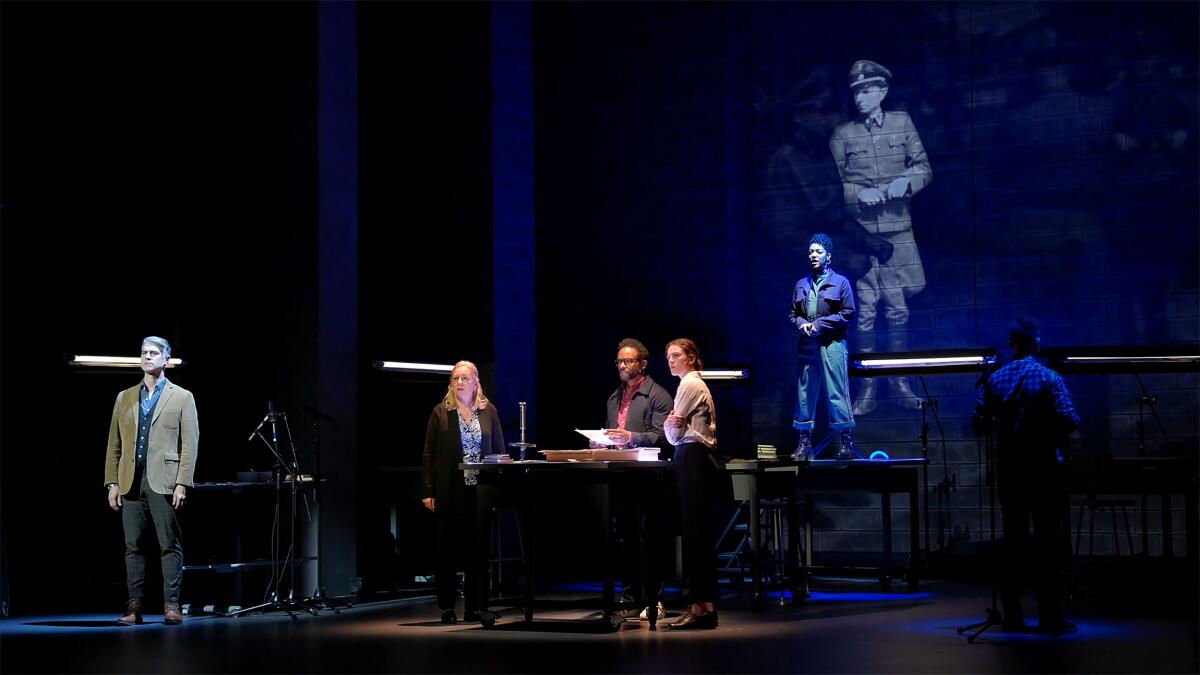
How a photograph of Nazis consuming blueberries impressed Moisés Kaufman and Amanda Gronich’s Holocaust play
Entertainment

How a photograph of Nazis consuming blueberries impressed Moisés Kaufman and Amanda Gronich’s Holocaust play

Editorial Board March 14, 2025
Affected person personas supply perception into well being care enhancements
May psychotherapy work by altering how we navigate our personal minds?
Showcase Your Expertise for Ronaldo in Binance’s Fifth ‘ForeverSkills’ Drop | NFT Information Right now
Exploring the dangers of bypassing pure choice in assisted copy

You Might Also Like

The AI that scored 95% — till consultants discovered it was AI
Technology

The AI that scored 95% — till consultants discovered it was AI

December 9, 2025
Mistral launches highly effective Devstral 2 coding mannequin together with open supply, laptop-friendly model
Technology

Mistral launches highly effective Devstral 2 coding mannequin together with open supply, laptop-friendly model

December 9, 2025
Model-context AI: The lacking requirement for advertising AI
Technology

Model-context AI: The lacking requirement for advertising AI

December 9, 2025
Databricks' OfficeQA uncovers disconnect: AI brokers ace summary checks however stall at 45% on enterprise docs
Technology

Databricks' OfficeQA uncovers disconnect: AI brokers ace summary checks however stall at 45% on enterprise docs

December 9, 2025

Categories

  • Health
  • Sports
  • Politics
  • Entertainment
  • Technology
  • Art
  • World

About US

New York Dawn is a proud and integral publication of the Enspirers News Group, embodying the values of journalistic integrity and excellence.
Company
  • About Us
  • Newsroom Policies & Standards
  • Diversity & Inclusion
  • Careers
  • Media & Community Relations
  • Accessibility Statement
Contact Us
  • Contact Us
  • Contact Customer Care
  • Advertise
  • Licensing & Syndication
  • Request a Correction
  • Contact the Newsroom
  • Send a News Tip
  • Report a Vulnerability
Term of Use
  • Digital Products Terms of Sale
  • Terms of Service
  • Privacy Policy
  • Cookie Settings
  • Submissions & Discussion Policy
  • RSS Terms of Service
  • Ad Choices
© 2024 New York Dawn. All Rights Reserved.
Welcome Back!

Sign in to your account

Lost your password?