


A Texas law prohibiting large social media companies from removing political speech became the first of its kind to take effect on Wednesday, posing complicated questions for major web platforms about how to comply with the rules.
The law, which applies to social media platforms in the United States with 50 million or more monthly active users, was passed last year by lawmakers who take issue with sites like Facebook and Twitter over their removal of posts from conservative publishers and personalities. The law makes it possible for users or the state’s attorney general to sue online platforms that remove posts because they express a certain viewpoint.
In a short order on Wednesday, the United States Court of Appeals for the Fifth Circuit, based in New Orleans, reversed an earlier ruling that stopped the state from enforcing the law. While tech industry groups challenging the law are expected to appeal the ruling, it creates uncertainty for major web platforms that could now face lawsuits when they decide to take down content for violating their rules.
The surprise ruling comes amid a broader debate in Washington, statehouses and foreign capitols about how to balance free expression with safety online. Some members of Congress have proposed making online platforms liable when they promote discriminatory ads or misinformation about public health. The European Union last month reached an agreement on rules meant to fight disinformation and increase transparency around how social media companies operate.
But conservatives have said that the platforms remove too much — rather than too little — content. Many of them cheered Elon Musk’s recent purchase of Twitter because he has promised lighter restrictions on speech. When the site banned President Donald J. Trump after the Jan. 6, 2021, attack on the Capitol, Republicans in statehouses proposed legislation to regulate how the companies enforce their policies.
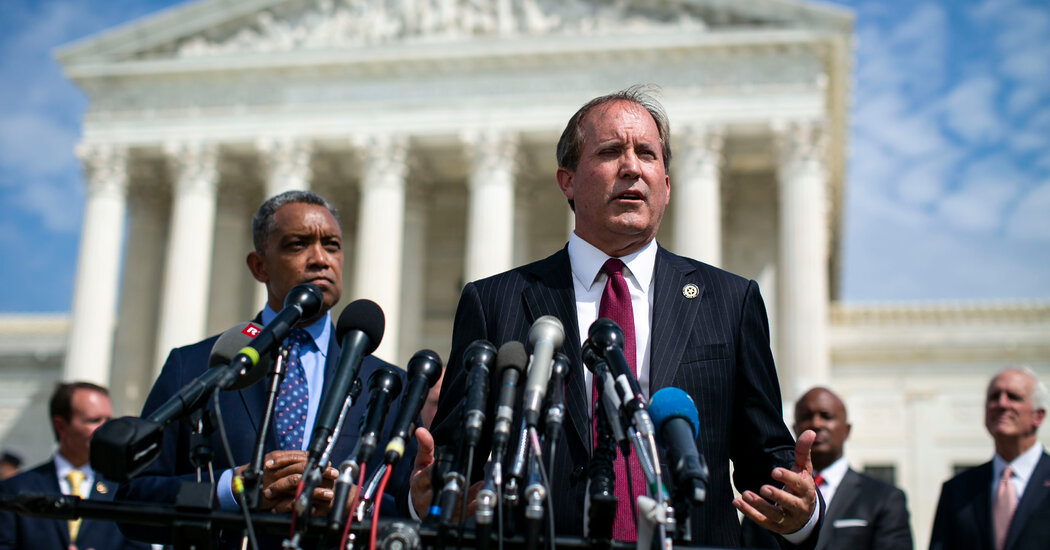
“My office just secured another BIG WIN against BIG TECH,” Ken Paxton, the Texas attorney general and a Republican, said in a tweet after the law was reinstated. A spokesman for Mr. Paxton did not provide details of how the attorney general planned to enforce the law.
Florida passed a bill last year that fined companies if they took down the accounts of some political candidates, but a federal judge stopped it from taking effect after tech industry groups sued. Texas’ bill takes a slightly different approach, saying that a platform “may not censor a user, a user’s expression, or a user’s ability to receive the expression of another person” based on the “viewpoint of the user or another person.”
The law does not stop platforms from taking down content when they are notified about it by organizations that track online sexual exploitation of children, or when it “consists of specific threats of violence” against someone based on the person’s race or other protected qualities. The law also includes provisions that require online platforms to be transparent about their moderation policies.
When Texas’ governor signed the state’s bill into law in September, the tech industry sued to block it. It argued that the prohibition it placed on platforms violated their own free speech right to remove anything they deem objectionable.
The United States District Court for the Western District of Texas stayed the law in December, saying it violated the Constitution. When the appeals court on Wednesday reversed the district court’s decision, it did not weigh in on the merits of the law.
Carl Szabo, the vice president of NetChoice, a group funded by companies including Google, Meta and Twitter that sued to block the law, said, “We are weighing our options and plan to appeal the order immediately.”
Spokesmen for Facebook and Twitter declined to comment on their plans.
Jameel Jaffer, the executive director of the Knight First Amendment Institute at Columbia University, which filed briefs in Texas and Florida opposing the laws, said it was “really disturbing” that the appeals court had seemingly bought Texas’ argument that the law was legally permissible.
“To accept that theory is to give the government sweeping power to distort or manipulate discourse online,” he said.
Critics of the law say they believe it will leave platforms in a bind: leave up disinformation and racist content or face lawsuits across Texas. Daphne Keller, a former lawyer at Google who is now the director of the platform regulation program at Stanford University’s Cyber Policy Center, said that a company’s compliance with the law would “drastically change the service that they offer.”
Ms. Keller said that companies could consider restricting access to their websites in Texas. But it is unclear if that move would itself violate the law.
“If you’re the companies, I’m sure you’re thinking about, ‘Could we do that?’” she said. “Then there’s the question about how that would play in the public eye.”

