

We collect cookies to analyze our website traffic and performance; we never collect any personal data. Cookie Policy
Accept
NEW YORK DAWN™NEW YORK DAWN™NEW YORK DAWN™
Notification Show More
Font ResizerAa
  • Home
  • Trending
  • New York
  • World
  • Politics
  • Business
    • Business
    • Economy
    • Real Estate
  • Crypto & NFTs
  • Tech
  • Lifestyle
    • Lifestyle
    • Food
    • Travel
    • Fashion
    • Art
  • Health
  • Sports
  • Entertainment
Reading: Japan’s Economy Shrank 1 Percent as Consumers Fled Covid
Share
Font ResizerAa
NEW YORK DAWN™NEW YORK DAWN™
Search
  • Home
  • Trending
  • New York
  • World
  • Politics
  • Business
    • Business
    • Economy
    • Real Estate
  • Crypto & NFTs
  • Tech
  • Lifestyle
    • Lifestyle
    • Food
    • Travel
    • Fashion
    • Art
  • Health
  • Sports
  • Entertainment
Follow US
NEW YORK DAWN™ > Blog > Business > Japan’s Economy Shrank 1 Percent as Consumers Fled Covid
Japan’s Economy Shrank 1 Percent as Consumers Fled Covid
Business

Japan’s Economy Shrank 1 Percent as Consumers Fled Covid

Last updated: May 18, 2022 12:29 am
Editorial Board Published May 18, 2022
Share
SHARE
18 Japan Economy facebookJumbo

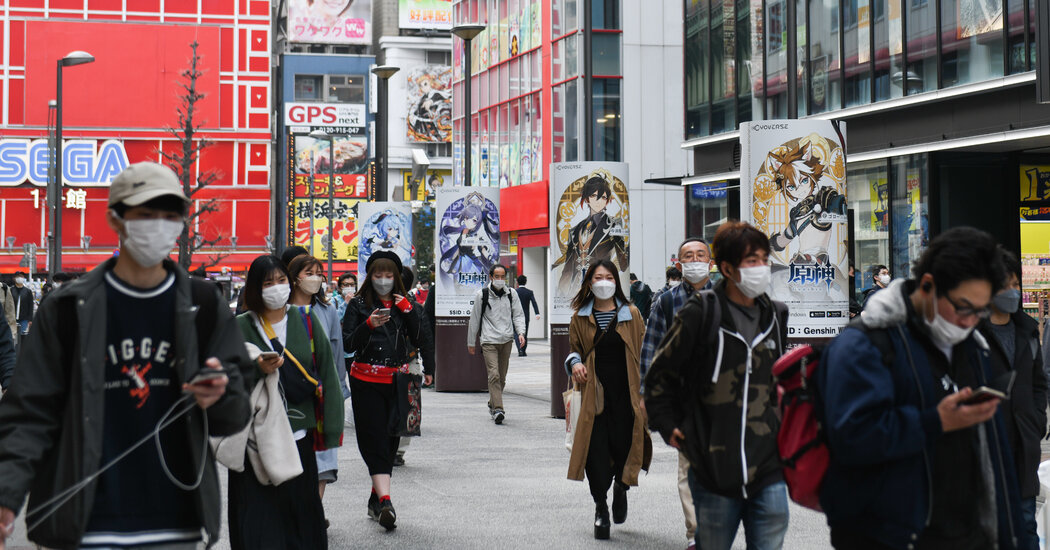
TOKYO — Last December, after two years of stop-and-go growth, Japan’s economic engine seemed like it might finally be revving up. Covid cases were practically nonexistent. Consumers were back on the town, shopping, eating out, traveling. The year 2021 ended on a high note, with the country’s economy expanding on an annual basis for the first time in three years.

But the Omicron variant of the coronavirus, geopolitical turmoil and supply chain snarls have once again set back Japan’s fragile economic recovery. In the first three months of the year, the country’s economy, the world’s third largest after the United States and China, shrank at an annualized rate of 1 percent, government data showed on Wednesday.

A combination of factors contributed to the decline in growth. In January, Japan had put into place new emergency measures as coronavirus case numbers, driven up by Omicron, moved toward the highest levels of the pandemic. In February, Russia invaded Ukraine, spiking energy prices. And that was before China, Japan’s largest export market and a key supplier of parts and labor to its manufacturers, imposed new lockdowns in Shanghai, throwing supply chains into chaos.

The contraction has not been as “extreme” as previous economic setbacks thanks to high levels of vaccine uptake and less wide-ranging emergency measures than during previous waves of the coronavirus, according to Shinichiro Kobayashi, principal economist at the Mitsubishi UFJ Research Institute.

But Japan’s economic recovery from the enormous damage done by the pandemic has also not been as fast as the United States, China or the European Union, he said.

Understand the Supply Chain Crisis

“The pace has been slow,” he said, adding that Japan was the “only country among major economies that hasn’t recovered.”

Growth is likely to bounce back strongly in the second quarter, analysts said, a pattern that has defined Japan’s economy during the pandemic: Demand has waxed as Covid cases have waned, and vice versa.

Still, growth in the coming months will face some tough challenges. The pandemic and the war in Ukraine have fueled big increases in the costs of food and energy in Japan. And moves by the U.S. Federal Reserve to tackle high inflation have caused the value of the Japanese currency, the yen, to plummet. That has driven up costs in the resource-poor country, which is highly dependent on imports for food, fuel and raw materials.

Inflation in the country, while still modest, is rising at its fastest pace in years, with consumer prices in Tokyo increasing by 2.5 percent in April. And over the last year, prices for producers have shot up 10 percent, the highest levels since 1980.

China’s draconian efforts to keep Covid under control are likely to create additional disruptions for Japanese companies that manufacture, source parts and export their goods there.

How the Supply Chain Crisis Unfolded


Card 1 of 9

The pandemic sparked the problem. The highly intricate and interconnected global supply chain is in upheaval. Much of the crisis can be traced to the outbreak of Covid-19, which triggered an economic slowdown, mass layoffs and a halt to production. Here’s what happened next:

A reduction in shipping. With fewer goods being made and fewer people with paychecks to spend at the start of the pandemic, manufacturers and shipping companies assumed that demand would drop sharply. But that proved to be a mistake, as demand for some items would surge.

Demand for protective gear spiked. In early 2020, the entire planet suddenly needed surgical masks and gowns. Most of these goods were made in China. As Chinese factories ramped up production, cargo vessels began delivering gear around the globe.

Then, a shipping container shortage. Shipping containers piled up in many parts of the world after they were emptied. The result was a shortage of containers in the one country that needed them the most: China, where factories would begin pumping out goods in record volumes.

Demand for durable goods increased. The pandemic shifted Americans’ spending from eating out and attending events to office furniture, electronics and kitchen appliances – mostly purchased online. The spending was also encouraged by government stimulus programs.

Strained supply chains. Factory goods swiftly overwhelmed U.S. ports. Swelling orders further outstripped the availability of shipping containers, and the cost of shipping a container from Shanghai to Los Angeles skyrocketed tenfold.

Consumer spending “will recover from the downward pressure, but because there are these negative factors, the question is how broad will that recovery be?” said Yoshiki Shinke, a senior economist at Dai-ichi Life Research Institute.

Japan’s prime minister, Fumio Kishida, has tried to offset the effects of price increases with large government subsidies for fuel and cash handouts for families with children. But Japanese consumers, wary of the pandemic’s economic effects, have largely been putting rounds of stimulus money into savings.

Japan’s growth is facing diverse challenges, but ultimately its recovery will depend on Covid, analysts said, a common refrain over the last two years.

While Japan has high vaccination rates and has performed better than most other wealthy countries at keeping the pandemic in check, the virus’s protean nature has made it difficult to predict its path. And that has made experts hesitant to commit to any forecasts about its future impact on global economies.

“The big risk is that corona starts to spread again,” said Naoyuki Shiraishi, an economist at the Japan Research Institute. “If a new variant appears, there will be new restrictions on activity, and that will suppress consumption.”


You Might Also Like

Breaking Limits: The Evolution of Fabian Niklas Ciobanu

The Brand Doctor

Russia for Business: Experts Who Help Drive Decisions

The Quiet Shift in America’s Workforce: Why Side Hustles Are Becoming Essential for Women Over 40

From Pattaya to the World: Bryan Flowers’ Unstoppable Rise as a Global Entrepreneur

TAGGED:Coronavirus Omicron VariantCurrencyEconomic Conditions and TrendsInflation (Economics)International Trade and World MarketJapanSupply ChainThe Washington Mail
Share This Article
Facebook Twitter Email Print

Follow US

Find US on Social Medias
FacebookLike
TwitterFollow
YoutubeSubscribe
TelegramFollow
Popular News
Should You Buy Now, Pay Later? Tread Carefully.
Technology

Should You Buy Now, Pay Later? Tread Carefully.

Editorial Board June 22, 2022
Genome-edited stem cells reveal new hope for weight problems remedy with out muscle loss
New pointers on the function of rising therapies in managing adults with metastatic mind tumors
Group of Black lawmakers blast effort in addition Mayor Adams, warn Hochul of political fallout
US assist cuts halt HIV vaccine analysis in South Africa, with international impression

You Might Also Like

Exploring the Impact of Boardsi’s New Board Suite Through the Eyes of CEO Martin Rowinski
BusinessTrending

Exploring the Impact of Boardsi’s New Board Suite Through the Eyes of CEO Martin Rowinski

May 14, 2025
Astana International Forum 2025: “Connecting Minds, Shaping the Future”
BusinessTrending

Astana International Forum 2025: “Connecting Minds, Shaping the Future”

April 9, 2025
Investment success: GP Fatih Marketing Research Co LLC and the gold dream in Africa
BusinessTrending

Investment success: GP Fatih Marketing Research Co LLC and the gold dream in Africa

March 15, 2025
Al Amari Group Earns International Acclaim as a Trusted 5-Star Rated Firm
BusinessTrending

Al Amari Group Earns International Acclaim as a Trusted 5-Star Rated Firm

December 10, 2024

Categories

  • Health
  • Sports
  • Politics
  • Entertainment
  • Technology
  • Art
  • World

About US

New York Dawn is a proud and integral publication of the Enspirers News Group, embodying the values of journalistic integrity and excellence.
Company
  • About Us
  • Newsroom Policies & Standards
  • Diversity & Inclusion
  • Careers
  • Media & Community Relations
  • Accessibility Statement
Contact Us
  • Contact Us
  • Contact Customer Care
  • Advertise
  • Licensing & Syndication
  • Request a Correction
  • Contact the Newsroom
  • Send a News Tip
  • Report a Vulnerability
Term of Use
  • Digital Products Terms of Sale
  • Terms of Service
  • Privacy Policy
  • Cookie Settings
  • Submissions & Discussion Policy
  • RSS Terms of Service
  • Ad Choices
© 2024 New York Dawn. All Rights Reserved.
Welcome Back!

Sign in to your account

Lost your password?