

We collect cookies to analyze our website traffic and performance; we never collect any personal data. Cookie Policy
Accept
NEW YORK DAWN™NEW YORK DAWN™NEW YORK DAWN™
Notification Show More
Font ResizerAa
  • Home
  • Trending
  • New York
  • World
  • Politics
  • Business
    • Business
    • Economy
    • Real Estate
  • Crypto & NFTs
  • Tech
  • Lifestyle
    • Lifestyle
    • Food
    • Travel
    • Fashion
    • Art
  • Health
  • Sports
  • Entertainment
Reading: Supreme Court Rules Against Police in Malicious Prosecution Case
Share
Font ResizerAa
NEW YORK DAWN™NEW YORK DAWN™
Search
  • Home
  • Trending
  • New York
  • World
  • Politics
  • Business
    • Business
    • Economy
    • Real Estate
  • Crypto & NFTs
  • Tech
  • Lifestyle
    • Lifestyle
    • Food
    • Travel
    • Fashion
    • Art
  • Health
  • Sports
  • Entertainment
Follow US
NEW YORK DAWN™ > Blog > Politics > Supreme Court Rules Against Police in Malicious Prosecution Case
Supreme Court Rules Against Police in Malicious Prosecution Case
Politics

Supreme Court Rules Against Police in Malicious Prosecution Case

Last updated: April 4, 2022 7:10 pm
Editorial Board Published April 4, 2022
Share
SHARE
merlin 204353478 1e6f68ae a0e6 417e b024 2fb094316630 facebookJumbo

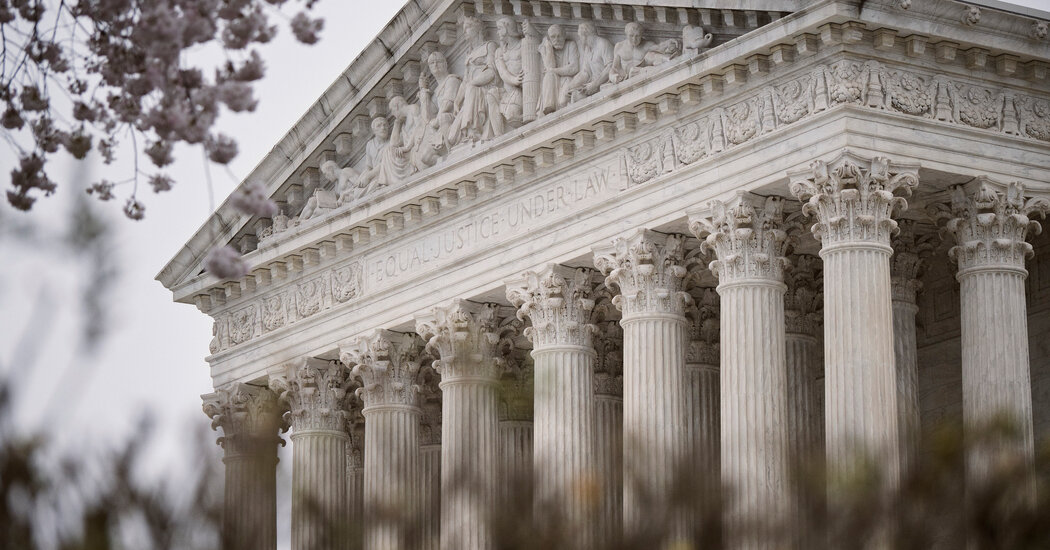
WASHINGTON — The Supreme Court ruled on Monday in favor of a Brooklyn man who said he had been falsely accused by police officers of resisting arrest, saying he could sue for malicious prosecution under a federal civil rights law.

The vote was 6 to 3, with the majority deciding only the narrow question of what the man, Larry Thompson, had to show to meet a requirement that there was a favorable termination of the prosecution against him. Justice Brett M. Kavanaugh, writing for the majority, said it was enough that prosecutors had dropped the charges, rejecting the view that Mr. Thompson had to demonstrate that there had been some affirmative indication of his innocence.

The case started in 2014, as Mr. Thompson, a Navy veteran and longtime postal worker, was living with his fiancée, their newborn baby girl and Mr. Thompson’s sister-in-law who, Justice Kavanaugh wrote, “apparently suffered from a mental illness.”

When the baby was a week old, the sister-in-law called 911 and accused Mr. Thompson of sexually abusing the infant, citing a red rash on her buttocks that turned out to be diaper rash. When four police officers arrived, Mr. Thompson refused to let them in without a warrant.

They entered anyway, tackling Mr. Thompson and pinning him to the floor. The officers handcuffed and arrested him. While he was in jail for two days, one officer filed a criminal complaint charging Mr. Thompson with resisting arrest. Prosecutors eventually dropped the charges.

Mr. Thompson sued the officers under an 1871 federal civil rights law known as Section 1983 that allows citizens to sue state officials, including police officers, over violations of constitutional rights. He said the officers had violated the Fourth Amendment, which prohibits unreasonable seizures.

Lower courts dismissed his malicious prosecution claim, saying that a precedent of the federal appeals court in New York required him to show “that the underlying criminal proceeding ended in a manner that affirmatively indicates his innocence.”

Even as he ruled against Mr. Thompson in 2019, however, Judge Jack B. Weinstein of the Federal District Court in Brooklyn said the precedent “can and should be changed.” Judge Weinstein died last year.

Justice Kavanaugh wrote that malicious prosecution law in 1871 generally did not require more than dismissal of charges to overcome the requirement of a favorable termination.

“Requiring the plaintiff to show that his prosecution ended with an affirmative indication of innocence would paradoxically foreclose” a Section 1983 claim, he wrote, “when the government’s case was weaker and dismissed without explanation before trial, but allow a claim when the government’s evidence was substantial enough to proceed to trial.”

The ruling was narrow and incremental, and Justice Kavanaugh noted that it left police officers with other ways to defeat “unwarranted civil suits,” notably including qualified immunity, the doctrine that requires plaintiffs to show not only that the officer had violated a constitutional right but also that the right had been “clearly established” in a previous ruling.

Chief Justice John G. Roberts Jr. and Justices Stephen G. Breyer, Sonia Sotomayor, Elena Kagan and Amy Coney Barrett joined the majority opinion.

In dissent, Justice Samuel A. Alito Jr. wrote that the majority had failed to demonstrate the federal law allowed malicious prosecution claims at all, saying that Justice Kavanaugh had stitched together “elements taken from two very different claims: a Fourth Amendment unreasonable seizure claim and a common-law malicious-prosecution claim.”

“In fact,” he wrote, “the Fourth Amendment and malicious prosecution have almost nothing in common.”

Justices Clarence Thomas and Neil M. Gorsuch joined Justice Alito’s dissent in the case, Thompson v. Clark, No. 20-659.


You Might Also Like

Chuck Schumer sounds alarm on impending Union Pacific-Norfolk Southern railroad merger

White Home deletes then posts new Sabrina Carpenter video selling ICE raids

Mayor Adams says he’s cooperating in metropolis corruption watchdog probe

Comptroller Brad Lander pleads not responsible in ICE protest as he mulls run for Congress

Supreme Court docket approves Texas map, Republicans regain redistricting edge

TAGGED:Appeals Courts (US)Brooklyn (NYC)Decisions and VerdictsKavanaugh, Brett MPolicePolice Department (NYC)Supreme Court (US)The Washington MailWeinstein, Jack B
Share This Article
Facebook Twitter Email Print

Follow US

Find US on Social Medias
FacebookLike
TwitterFollow
YoutubeSubscribe
TelegramFollow
Popular News
Cecilia Vicuña’s Poetry in House
Art

Cecilia Vicuña’s Poetry in House

Editorial Board December 15, 2024
Brazil, Land of the Thong, Embraces Its Heavier Self
Mapping research pinpoints key mind areas for reasoning expertise
Nvidia helps launch AI platform for instructing American Signal Language
18 Ideas for Constructing a Self-Tape Studio in Your House: Ideas from Specialists within the Area

You Might Also Like

Supreme Courtroom will take into account Trump push to finish birthright citizenship
Politics

Supreme Courtroom will take into account Trump push to finish birthright citizenship

December 5, 2025
Brian Cole Jr. confesses in Jan. 6 pipe bomb case: What we all know up to now
Politics

Brian Cole Jr. confesses in Jan. 6 pipe bomb case: What we all know up to now

December 5, 2025
President Trump awarded inaugural FIFA Peace Prize
Politics

President Trump awarded inaugural FIFA Peace Prize

December 5, 2025
VP JD Vance shuts down rumors of marriage bother with Usha
Politics

VP JD Vance shuts down rumors of marriage bother with Usha

December 5, 2025

Categories

  • Health
  • Sports
  • Politics
  • Entertainment
  • Technology
  • Art
  • World

About US

New York Dawn is a proud and integral publication of the Enspirers News Group, embodying the values of journalistic integrity and excellence.
Company
  • About Us
  • Newsroom Policies & Standards
  • Diversity & Inclusion
  • Careers
  • Media & Community Relations
  • Accessibility Statement
Contact Us
  • Contact Us
  • Contact Customer Care
  • Advertise
  • Licensing & Syndication
  • Request a Correction
  • Contact the Newsroom
  • Send a News Tip
  • Report a Vulnerability
Term of Use
  • Digital Products Terms of Sale
  • Terms of Service
  • Privacy Policy
  • Cookie Settings
  • Submissions & Discussion Policy
  • RSS Terms of Service
  • Ad Choices
© 2024 New York Dawn. All Rights Reserved.
Welcome Back!

Sign in to your account

Lost your password?