

We collect cookies to analyze our website traffic and performance; we never collect any personal data. Cookie Policy
Accept
NEW YORK DAWN™NEW YORK DAWN™NEW YORK DAWN™
Notification Show More
Font ResizerAa
  • Home
  • Trending
  • New York
  • World
  • Politics
  • Business
    • Business
    • Economy
    • Real Estate
  • Crypto & NFTs
  • Tech
  • Lifestyle
    • Lifestyle
    • Food
    • Travel
    • Fashion
    • Art
  • Health
  • Sports
  • Entertainment
Reading: What Does Apple’s $3 Trillion Valuation Mean?
Share
Font ResizerAa
NEW YORK DAWN™NEW YORK DAWN™
Search
  • Home
  • Trending
  • New York
  • World
  • Politics
  • Business
    • Business
    • Economy
    • Real Estate
  • Crypto & NFTs
  • Tech
  • Lifestyle
    • Lifestyle
    • Food
    • Travel
    • Fashion
    • Art
  • Health
  • Sports
  • Entertainment
Follow US
NEW YORK DAWN™ > Blog > Technology > What Does Apple’s $3 Trillion Valuation Mean?
What Does Apple’s  Trillion Valuation Mean?
Technology

What Does Apple’s $3 Trillion Valuation Mean?

Last updated: January 5, 2022 5:44 pm
Editorial Board Published January 5, 2022
Share
SHARE
05OnTech Apple nl facebookJumbo v2

This article is part of the On Tech newsletter. Here is a collection of past columns.

$3,000,000,000,000.

That was (briefly) the total value of Apple’s stock on Monday. It was worth a piddly $2.93 trillion as of Wednesday morning — still a bonkers number that no company has reached before.

The milestone is a useful moment to dig into the identity of Apple and the rest of America’s technology titans. Big Tech companies are smart at making products and even smarter at making money. That is a big reason Apple is worth so much.

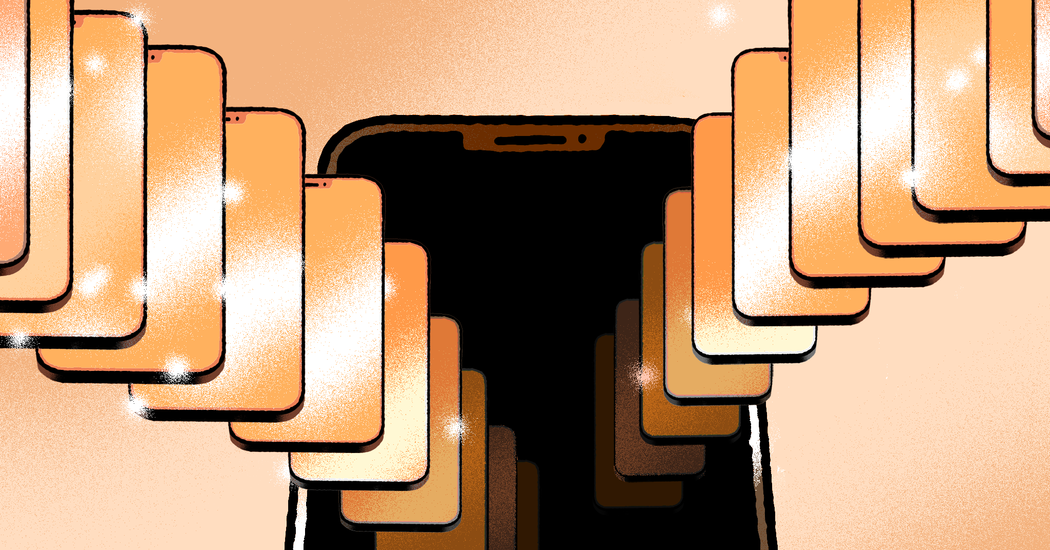
What is Apple’s superpower? With clever tweaks and desirable new products, it has extended the life of its iPhone empire well beyond when it might have declined. What should have been Apple’s weakness — its dependence on the iPhone, at a time when smartphones are no longer selling like hot cakes — instead has been a source of strength.

Like knowing that Google and Facebook are rich from selling advertisements for socks and hotel stays, understanding the nuts and bolts behind Apple’s power helps demystify the technology titans that have grabbed both our awe and derision.

In the spirit of Tuesday’s newsletter about technology misjudgments, I will confess that I was wrong about Apple. Six years ago, I wrote a column for Bloomberg Opinion — the first of many like it — that said Apple was hitting a wall.

Since then, Apple’s sales have increased by more than $132 billion, or about triple the amount that Tesla’s sales have grown since 2015. Apple’s profits are unreal, and we’re probably paying too much for their $19 cleaning rags.

I still think I’m right about Apple, but I’m just not right yet. (You might describe this as being wrong. I won’t argue.) The facts remain: The company’s principal product, smartphones, have shifted from wow to normal, and people aren’t buying new ones as often as they used to.

In 2015, about 1.4 billion new smartphones were sold worldwide. In 2021, the research firm IDC estimated total sales at … about 1.4 billion. The chunk of those that are iPhones — about one in seven — hasn’t budged much, either. There are exceptions to this sales flatline trend, including last year when a burst of new iPhones sold.

But mostly, this is what smartphones are now: a wonderful and essential product that people don’t buy very often, like fridges, cars and TV sets. In theory, our buying fewer phones should be bad for Apple. Instead, Apple has done great because it’s extremely clever at making money and has persuaded customers that they should buy what it sells.

Apple has figured out ways to sell far more types of iPhones than it did before, including ultraexpensive ones. It has mastered underappreciated details like self-designed computer chips and nudges iPhone buyers to pay more for add-ons like extra space to stow photos. And the company keeps coming up with new ways to make money from stuff that makes iPhones more useful, including subscriptions for dating apps, AirPods headphones and computerized watches.

This isn’t Apple shifting away from its identity as the iPhone company. It is leaning further into its iPhone dependence. I would say that it will be tough for Apple to keep doing this, but smartphone sales have been meh for six years and Apple is doing great.

None of that completely explains Apple’s march to $3 trillion. Money doesn’t make sense right now, honestly. And the Big Tech companies typically churn out consistent and steadily increasing profits that stock buyers are willing to pay for.

There’s also enthusiasm about Apple launching its first products in face computers and driverless cars that could, like the iPhone did, make other companies follow its lead and make Apple even richer.

Apple’s struggles with smart software — have you yelled at Siri recently for being clueless? — suggest that it won’t be a cake walk for the company to keep winning in a metaverse and artificial intelligence future. That’s not a prediction, though. I’m done making Apple predictions.


You Might Also Like

Claude Cowork turns Claude from a chat software into shared AI infrastructure

How OpenAI is scaling the PostgreSQL database to 800 million customers

Researchers broke each AI protection they examined. Listed below are 7 inquiries to ask distributors.

MemRL outperforms RAG on complicated agent benchmarks with out fine-tuning

All the pieces in voice AI simply modified: how enterprise AI builders can profit

TAGGED:Apple IncComputers and the Internetinternal-sub-only-nliPhoneSmartphonesThe Washington Mail
Share This Article
Facebook Twitter Email Print

Follow US

Find US on Social Medias
FacebookLike
TwitterFollow
YoutubeSubscribe
TelegramFollow
Popular News
Hulu technical glitches mar Oscars’ streaming debut for a lot of viewers
Entertainment

Hulu technical glitches mar Oscars’ streaming debut for a lot of viewers

Editorial Board March 3, 2025
Amid new tour and Rock Corridor nomination, Maná affirms ‘Latinos empower us’
Federal courtroom to weigh Trump’s deployment of Nationwide Guard troops in Chicago space
In New Textbooks, Hong Kong Was Never a British Colony
From ashes to mud: How Pablo González Vargas and Mayan Warrior lived to struggle one other Burning Man

You Might Also Like

Salesforce Analysis: Throughout the C-suite, belief is the important thing to scaling agentic AI
Technology

Salesforce Analysis: Throughout the C-suite, belief is the important thing to scaling agentic AI

January 22, 2026
Railway secures 0 million to problem AWS with AI-native cloud infrastructure
Technology

Railway secures $100 million to problem AWS with AI-native cloud infrastructure

January 22, 2026
Why LinkedIn says prompting was a non-starter — and small fashions was the breakthrough
Technology

Why LinkedIn says prompting was a non-starter — and small fashions was the breakthrough

January 22, 2026
ServiceNow positions itself because the management layer for enterprise AI execution
Technology

ServiceNow positions itself because the management layer for enterprise AI execution

January 21, 2026

Categories

  • Health
  • Sports
  • Politics
  • Entertainment
  • Technology
  • Art
  • World

About US

New York Dawn is a proud and integral publication of the Enspirers News Group, embodying the values of journalistic integrity and excellence.
Company
  • About Us
  • Newsroom Policies & Standards
  • Diversity & Inclusion
  • Careers
  • Media & Community Relations
  • Accessibility Statement
Contact Us
  • Contact Us
  • Contact Customer Care
  • Advertise
  • Licensing & Syndication
  • Request a Correction
  • Contact the Newsroom
  • Send a News Tip
  • Report a Vulnerability
Term of Use
  • Digital Products Terms of Sale
  • Terms of Service
  • Privacy Policy
  • Cookie Settings
  • Submissions & Discussion Policy
  • RSS Terms of Service
  • Ad Choices
© 2024 New York Dawn. All Rights Reserved.
Welcome Back!

Sign in to your account

Lost your password?